

Launching a side hustle or starting a small venture out of your garage or kitchen table is one of the most exciting steps toward generating multiple income streams and accelerating financial freedom. However, that initial rush can quickly turn into an administrative nightmare if you do not know exactly where your hard-earned dollars are going.
The fatal mistake for most home-based businesses is not a lack of clients—it is financial disorganization. If you mix your personal grocery money with the cash used to buy raw materials or tools for your services, your net profit completely disappears. Learning how to manage cash flow through straightforward principles is the ultimate secret to keeping your project alive and highly profitable.
In this quick guide, you will master how to structure your home business finances in 5 actionable steps.
What is Cash Flow and Why Does It Matter?
Cash flow is the ongoing record of all the money moving into (revenues) and out of (expenses) your venture within a specific window of time.
Think of it as the dashboard on your vehicle: it indicates whether you have enough fuel to keep driving or if there is a silent leak about to cause an unexpected breakdown. For dynamic professionals with flexible earnings, tracking this needs to be a weekly or even daily habit.
1. Establish an Immediate Physical and Digital Separation
Rule number one for home business success is simple: you are not your business. Even if you haven’t formalized a separate legal entity yet (like an LLC), you must draw a strict boundary between your funds.
- Open a separate bank account: Use a dedicated free digital account strictly to receive client payments and clear operational costs.
- Maintain a separate cash envelope: If clients pay you in cash, store those bills in a distinct container or lockbox. Never let it sit in your personal daily wallet.
2. Log Everything (Down to the Last Cent)
Never rely on mental math. To understand how to manage cash flow effectively, you must track every single transaction, no matter how small it seems. A $5 software transaction fee or a quick coffee with a client matters to your bottom line.
You can utilize a basic Excel spreadsheet, a dedicated journal, or digital bookkeeping apps. The critical part is building the routine of updating this log at least once a week—making it a staple of your personal organization day.
3. Categorize Your Inflows and Outflows
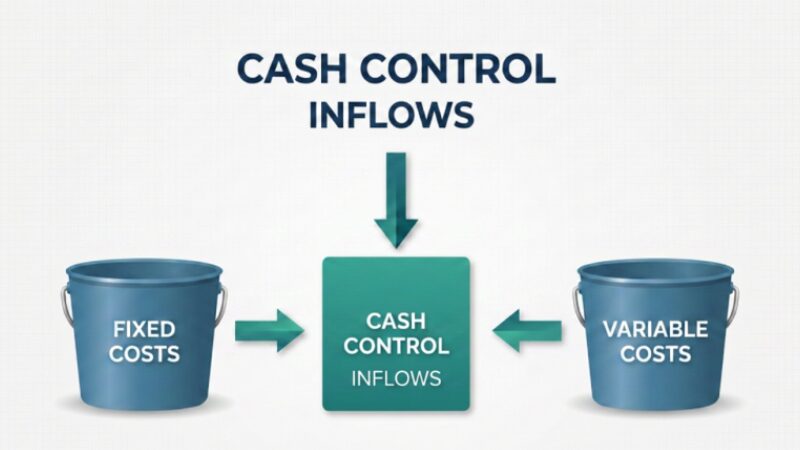
Simply writing down numbers isn’t enough; you need to organize them. Group your operational expenses into two main buckets to see where your money goes:
- Fixed Costs: Bills you pay regardless of your sales volume (e.g., software subscriptions, hosting platforms, internet access).
- Variable Costs: Expenses that only trigger when you perform a service or deliver a product (e.g., raw materials, business mileage, custom packaging).
4. Define Your Owner’s Draw (Your Salary)
The cash sitting in your home business account at the end of the month is not your private spending money—it is the venture’s retained profit. To avoid draining your business cash flow, establish a fixed monthly transfer or a set percentage as your personal wage (Owner’s Draw).
The remaining net profit left within the business account should stay there as operational working capital or be transferred strategically into your family’s asset protection vault.
The Foundation for Scalable Growth
Learning how to manage cash flow correctly elevates a simple side hustle into a legitimate business venture. This structural clarity provides the exact insight you need to know if it’s time to upgrade your equipment, expand your reach, or adjust your pricing model.
Controlling your cash flow shields your day-to-day operations. Your next smart strategic move is ensuring that the wealth built from this daily hustle is locked tightly against unexpected legal liabilities and health issues.
🛡️ Shield Your Inflow and Future Wealth
A healthy cash flow is the baseline for your long-term stability. Want to learn how to leverage your home business profits to build a shielded cash reserve and select the right insurance protections for independent contractors?
Click here to schedule a free asset protection consultation with Leandro Santiago and build your personalized security plan today.