

If you work as an independent contractor, are a gig worker, or operate in trades where your pay fluctuates every week, you know the drill: your income is a “surprise” every paycheck. One week you’re busy, the next, the volume drops.
The problem is that most American financial guides are written for W-2 employees with a fixed salary. They suggest “setting aside X dollars” every month. But how can you commit to a fixed amount when your income is constantly shifting?
If you feel like you’re living on a financial rollercoaster and saving seems impossible, this guide is for you.
The Percentage Rule: The Secret for Variable Income
When your income isn’t fixed, you should never think in terms of dollar amounts, but rather in percentages.
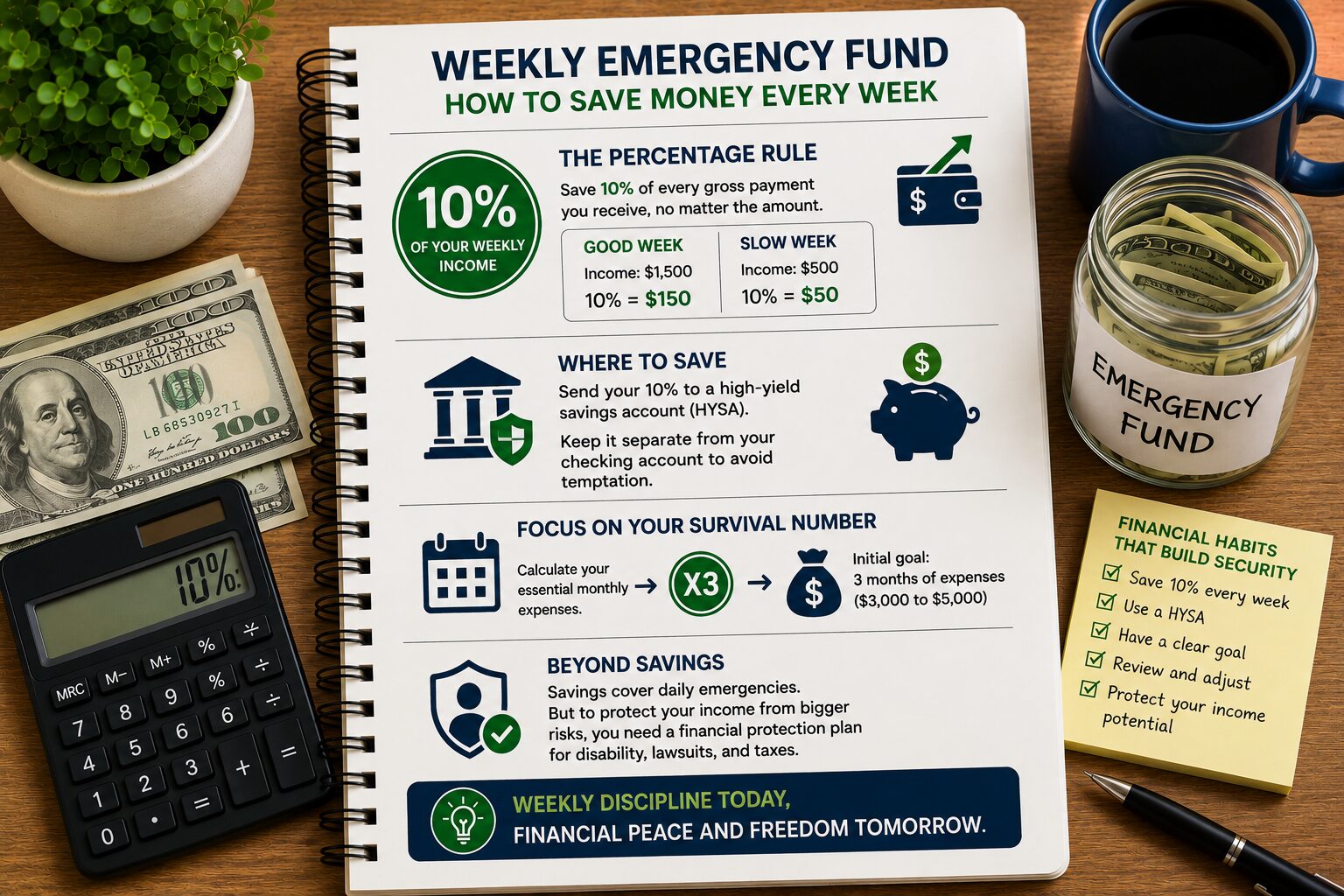
The rule is simple: it doesn’t matter if your weekly paycheck is $500 or $1,500—the percentage rule remains absolute. Set a goal to put 10% of every single paycheck straight into your savings account.
- Good week: You save more.
- Slow week: You save less.
- Result: You never miss a contribution, regardless of market fluctuations.
Where to Store Your Money
Do not keep your emergency fund in your daily checking account. The temptation to spend it on impulse purchases is too high.
Instead, use a High-Yield Savings Account (HYSA). Not only does this physically separate your reserve from your spending money, but these accounts also offer much higher interest rates than traditional banks. Your money remains liquid (accessible whenever you need it), but it isn’t sitting idle, losing value to inflation.
Your Goal: The First Milestone
Forget the advice of saving a massive amount right away. Focus on your “survival number.”
- Calculate your basic monthly living expenses (rent, food, transportation).
- Multiply that by 3. That is your initial goal of $3,000 to $5,000. Once you hit this milestone, you stop working just to “put out fires” and start achieving true financial peace of mind.
But Wait: Is Savings Enough?
Building an emergency fund is the first step to covering unexpected events like a car repair, a broken appliance, or a slow work week.
But what if the unexpected is bigger? What if it involves your long-term health, your ability to work, or your family’s future here in the U.S.?
If you have variable income, you cannot depend on luck or the American government. Savings are your first layer of safety, but they do not shield your future against the risks of the U.S. system, such as estate taxes, the dreaded Probate process, or disability.
The Next Step for Your Stability
Saving money is a survival habit, but protecting your wealth is an investor’s habit.
If you have started organizing your finances and want to know how to shield what you are building with such hard work against the risks of the American system, I have an invitation.
To understand how true asset protection works and learn about secure wealth-building tools—like Indexed Universal Life (IUL)—check out the full guide by licensed consultant Leandro Santiago.
👉 Click here to learn how to take the next step toward your financial stability in the USA