

Living and working in the United States delivers exceptional income opportunities, but anyone navigating the US economy knows that daily living costs can rapidly erode weekly earnings. Between high rent, utility bills, auto insurance premiums, groceries, and tax obligations, feeling like money disappears as fast as it arrives remains a constant challenge for many households.
The primary error most independent earners make is focusing exclusively on working longer hours to scale revenue, while allowing micro-cash leaks to destroy their budget on a daily basis. Optimizing every dollar spent is the fastest way to generate liquid cash flow to build emergency reserves and invest in your future.
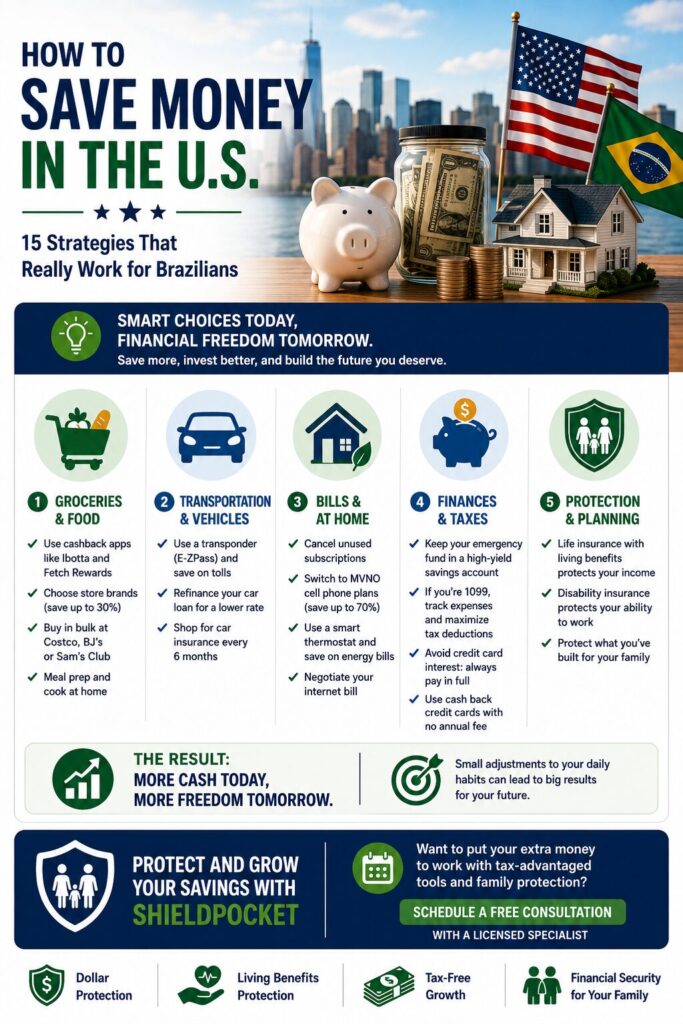
In this practical guide, we have compiled 15 proven strategies on how to save money in the us, covering housing, food, transportation, retail purchases, and tax optimization.
Grocery and Household Food Strategies
- Leverage Grocery Cashback Apps: Deploy apps like Ibotta and Fetch Rewards. Scanning your physical receipts after shopping at major retailers like Walmart or Target accumulates reward points that convert into direct cash or gift cards.
- Swap Name Brands for Private Store Labels: Chains like Aldi, Trader Joe’s, and Walmart supply store brands (Great Value, Simply Nature) manufactured by major brand suppliers at prices up to 30% lower.
- Shop Wholesale Outlets Strategically (Costco / BJ’s / Sam’s Club): Purchasing non-perishable goods, cleaning supplies, and meats in bulk lowers unit costs significantly. Split bulk purchases or annual membership fees with friends or family.
- Eliminate Mid-Week Dining Out Habits: Preparing work lunches (meal prep) over the weekend saves $15 to $25 per workday. By month’s end, you retain over $400 in your primary checking account.
Transportation and Auto Overhead Strategies
- Automate Toll Collections via Electronic Transponders: Deploying electronic transponders (like E-ZPass across Massachusetts and the East Coast) eliminates administrative Pay-By-Plate surcharge fees and secures commuter discounts across turnpikes and bridges.
- Refinance Your Auto Loan (Auto Refinance): If you financed a vehicle with limited credit history and accepted a high interest rate (above 10%), approach local Credit Unions to refinance the contract as soon as your credit score improves.
- Shop Auto Insurance Rates Every 6 Months: US auto insurance carriers adjust rates constantly. Request competitive quotes prior to policy renewals to secure lower premiums without sacrificing coverage limits.
Utility and Household Bill Strategies
- Audit Unused Subscriptions and Renegotiate Internet Service: Review your bank statements for forgotten streaming apps and gym memberships. Call your internet service provider to request promotional new-customer pricing or request retention discounts.
- Switch Mobile Carriers to MVNO Providers: Instead of paying $80 to $100 per line with major legacy carriers, transition to Mobile Virtual Network Operators (Mint Mobile, Cricket, Visible) that utilize the same cellular towers for $15 to $30 per month.
- Install a Smart Programmable Thermostat: Winter heating and summer cooling represent the largest utility expenses. Installing a programmable thermostat (such as Nest or Ecobee) reduces consumption during hours when you are away from home.
Financial and Tax Strategies
- Park Your Emergency Reserve in a HYSA: Leaving funds idle in a traditional checking account yields roughly 0.01% annually. Transfer your emergency reserve into a High-Yield Savings Account (such as Ally, Marcus, or Discover) to compound interest while maintaining daily liquidity.
- Track 100% of Business Write-Offs if You Earn 1099 Income: If you operate as an independent contractor, track every operational expense (fuel, tools, phone lines). Every legal write-off reduces your taxable net income on your Tax Return, saving thousands annually.
- Avoid Credit Card Interest by Paying Balances in Full: Never pay strictly the minimum balance on US credit cards. Annual Percentage Rates (APR) routinely exceed 25%. Treat your credit card strictly as a debit instrument.
- Utilize No-Fee Cashback Credit Cards: Deploy credit cards that return 1.5% to 3% cashback on everyday categories like groceries and fuel, settling the statement balance in full every billing cycle.
- Establish Private Asset Protection Structures: A medical emergency or workplace injury can wipe out years of savings. Securing life insurance with Living Benefits and disability coverage guarantees income streams if you are unable to work, safeguarding your net worth.
Strategic Habits Yield Long-Term Net Worth
Learning how to save money in the us does not mean living in a state of constant restriction; rather, it represents exercising intelligence over the destination of every dollar you earn. Eliminating unnecessary operational expenses is the fastest mechanism to create the financial margin required to hit major milestones in America.
The surplus liquid cash flow generated from these 15 strategies should carry a clear purpose: constructing your independence and ensuring your family operates under absolute financial protection.
🛡️ Protect and Compound Your Savings with ShieldPocket
Saving money daily forms the foundation of wealth preservation. Want to discover how to route your surplus cash flow into tax-advantaged accumulation vehicles and private family protection policies in the US?