

Anyone managing multiple income streams, working independently, or living on a flexible revenue knows exactly what the financial “roller coaster” feels like. There are excellent months, where contracts accumulate, and slower months, where cash flows in at a much more quiet pace.
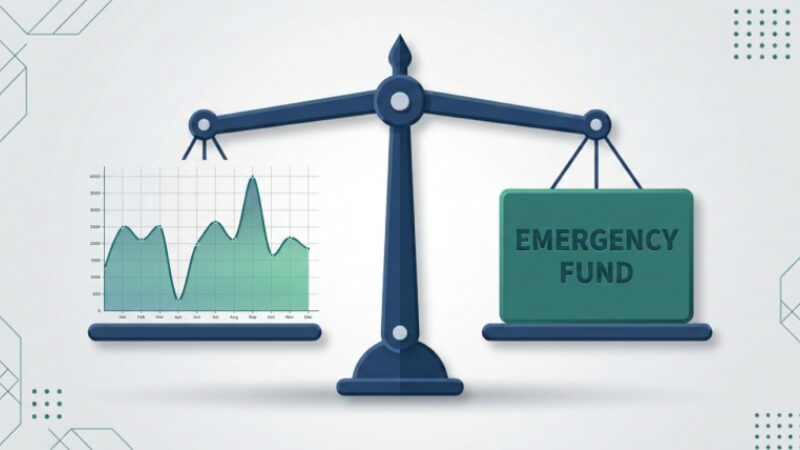
For those in this situation, the traditional financial advice of “saving a fixed amount every month” simply does not work. This is why learning how to build an emergency fund tailored to the reality of variable income is the most critical step to shield your budget and ensure that slower months do not turn into a household crisis.
In this practical guide, you will discover how to construct your financial safety net without needing a fixed, predictable paycheck.
Why the Safety Net for Flexible Income Needs to Be Different
For individuals with a traditional W-2 job and a highly predictable salary, an emergency fund covering 3 to 6 months of expenses is usually enough. However, when your income fluctuates, your overall financial risk is naturally higher.
If you operate as a contractor or rely on multiple independent projects, you should aim for a reserve covering 6 to 12 months of your essential living expenses. This larger cushion serves two vital purposes: covering true emergencies (like a vehicle breakdown or a medical bill) and supplementing your cash flow during months when the market slows down.
Step 1: Calculate Your “Survival Cost”
The single biggest mistake people make when planning a reserve is basing their math on what they spend during highly profitable months. To kickstart your blueprint, you need to map out your bare-minimum living expenses on paper, which includes:
- Housing (rent/mortgage and core utilities);
- Basic groceries and necessary transportation;
- Essential insurance lines (health, professional liability, and income protection).
If your essential survival cost is, for example, $2,500 per month, your long-term emergency fund goal should range between $15,000 (6 months) and $30.000 (12 months).
Step 2: Utilize the “Overflow Method” During High-Revenue Months
When you lack a fixed salary, you cannot save money linearly. The smart strategy here is to leverage peak earnings months by making the surplus cash “overflow” directly into your safety net.
Set a strict, reasonable cap on your personal monthly spending. Anything that comes in above that threshold during an excellent month must be transferred immediately to your emergency account—before you have the opportunity to spend it on lifestyle inflation. During lean months, you do the opposite: withdraw only the exact amount needed to bridge the gap and cover your survival baseline.
Step 3: Where to Store the Cash so It Stays Shielded and Accessible
An emergency reserve requires two non-negotiable features: safety (zero risk of losing principal value) and liquidity (the ability to access the cash on the very same day).
- High-Yield Savings Accounts (HYSA): Forget the traditional savings account at your everyday brick-and-mortar transactional bank. Look for online high-yield savings accounts. They pay significantly higher interest rates on your idle cash while keeping your balance completely secure and available for immediate withdrawal.
- Physical Separation: Keep this specific account at a digital bank or a completely separate institution from the one you use for daily bills. Constantly seeing that balance in your primary app creates a psychological illusion that you have extra money available to spend.
Mistakes That Ruin the Safety Net for Dynamic Professionals
Monitor your financial routine closely to avoid falling into these common market traps:
- Investing your emergency cash in stocks or crypto: Emergency money is not meant for speculation. If the market dips on the exact day you face a personal emergency, you are forced to lock in a massive financial loss.
- Using the reserve for “business opportunities”: Your emergency fund is strictly for unexpected personal hardships and core survival bills—not for buying inventory or financing a new side hustle venture. For those business needs, set up a completely separate capital bucket.
The Peace of Mind of Working Without Pressure
Holding a robust emergency fund completely transforms how you manage your multiple income streams. When you know that your household bills are fully covered for months ahead, you stop accepting bad contracts out of desperation and gain the leverage to negotiate prices and deadlines with true authority.
Organizing a variable budget is your foundational shield. The next smart move is ensuring that while your cash reserves grow, your physical ability to generate income and your hard-earned assets are legally locked away from lawsuits and health emergencies.
🛡️ Blueprint Your Financial Shield Today
Learning how to build an emergency fund is just the initial pillar of your long-term stability. Want to understand how to structure your cash milestones and integrate your savings with strategic insurance lines that protect your family’s lifestyle?
Click here to schedule a free consulting session with Leandro Santiago and build your personalized financial protection plan today.